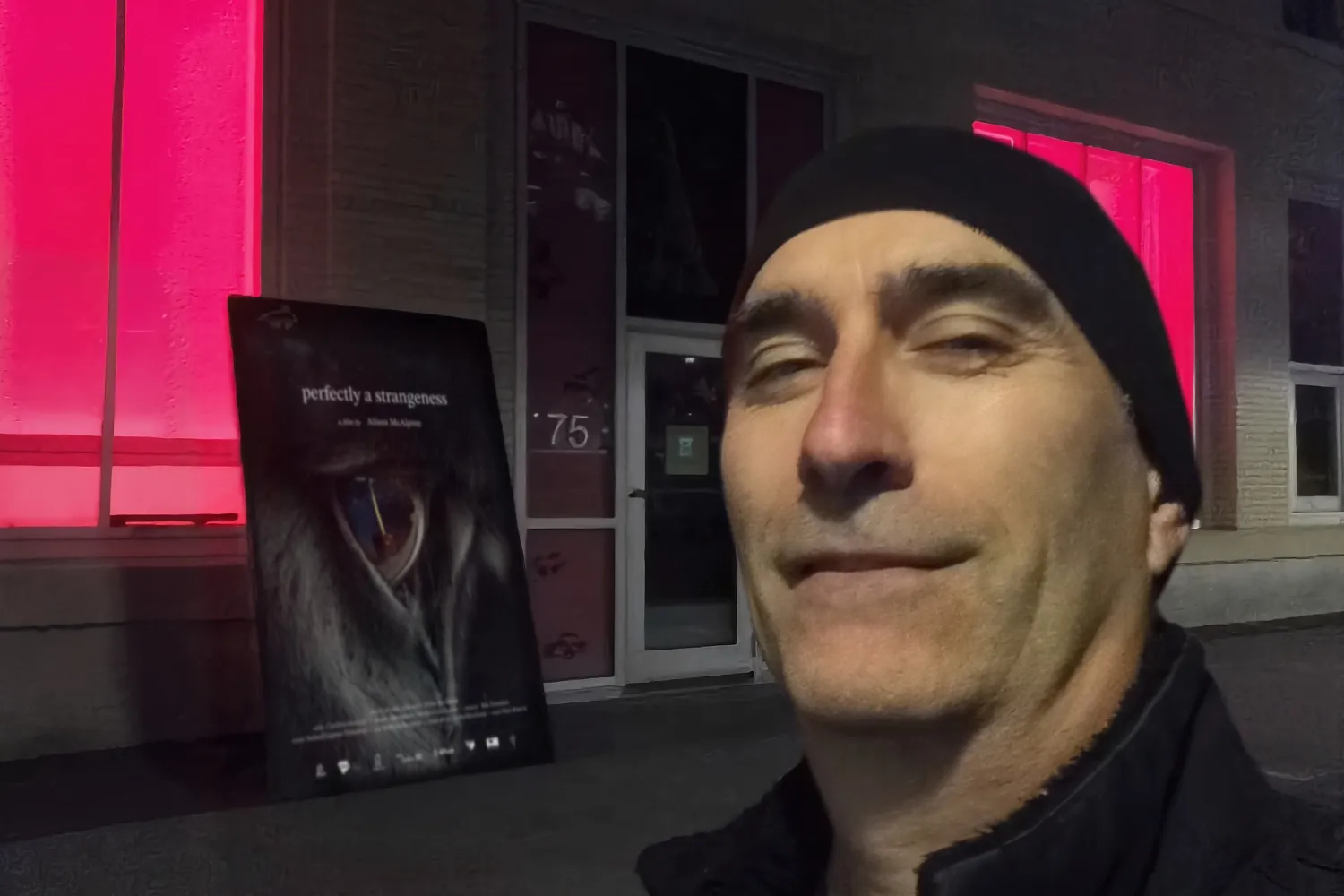
With the Academy Awards being held this Sunday, an Oscar nomination is sending Montreal-based visual effects artist Charles Marchand to Hollywood — a surreal milestone shaped, he says, by his studies at the Ontario College of Art, now OCAD University.
The OCAD U alum served as visual effects lead on Perfectly a Strangeness, nominated for Best Documentary Short Film at the Academy Awards. Working closely with director Alison McAlpine, he helped shape visual solutions that supported the film’s quiet, observational and poetic tone.
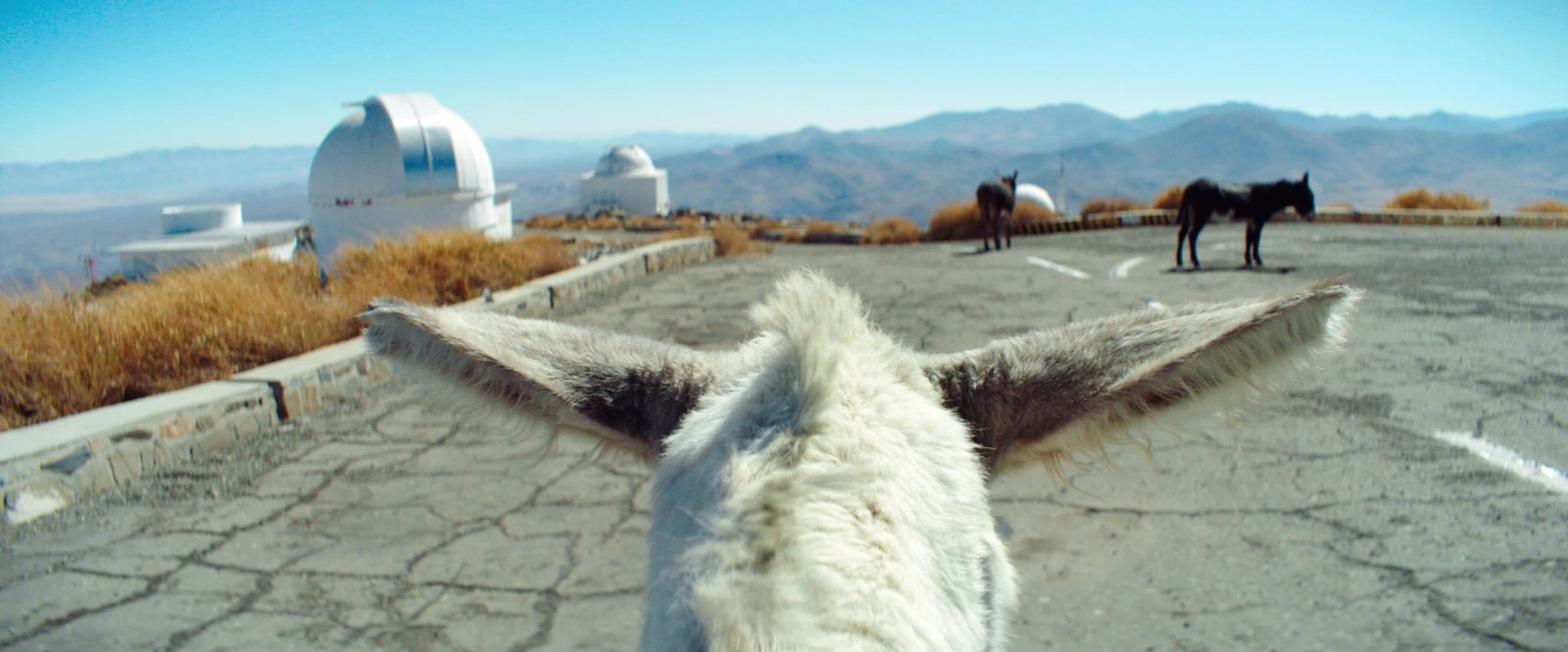
The 15-minute experimental film premiered at the Cannes Film Festival and was filmed primarily at La Silla Observatory, a European Southern Observatory (ESO) site in Chile, with additional scenes filmed further north at ESO's Paranal Observatory.
The film follows three donkeys wandering through the luminous desert landscape of northern Chile, where they stumble upon an abandoned astronomical observatory.
Through their journey and the striking visuals around it, the film explores sight, space, and wonder in a cinematic, poetic tone. There’s no dialogue; the experience is driven by imagery, cinematography, sound, and music, encouraging viewers to imagine how these animals might perceive the world around them and, metaphorically, the universe itself.
“Much of the work involved integrating astronomically correct night skies and optical treatments, refining transitions, and removing distracting elements, all while ensuring the effects remained invisible,” says Marchand.
Photo: Still from Perfectly a Strangeness.
“My responsibility was ultimately to keep the visual effects seamless, as if they had always belonged to the film.”
He completed the work using Flame, a high-end visual effects software that allows precise, frame-by-frame adjustments. The goal, he explains, was restraint. “Everything was done with a light touch, maintaining the feeling of discovery rather than pulling the viewer out of the experience,” says Marchand.
Marchand says he was immediately drawn to the film’s exploration of the intersection between the technical and the natural worlds—a space he has long been passionate about. “Translating that intimate vision to a global stage is always challenging,” he says.
He credits his time in the Experimental Arts program at OCAD U — then known as OCA — with shaping his approach.
“My education emphasized experimentation, critical observation and an understanding of images as cultural and emotional objects — not just technical ones,” he says. “That foundation helped me see visual effects as a creative and conceptual practice, where restraint and intention matter as much as technique. It also encouraged independence and adaptability, allowing me to move fluidly between art, technology and storytelling.”
Next, Marchand will work on a local independent television series and is in pre-production on a new film by director Kim Nguyen, whose past work includes the Oscar-nominated War Witch (2013). The upcoming film tells the story of Edith Blais and Luca Tacchetto, who were kidnapped in Mali in 2019.
“I’m drawn to projects where visual storytelling can support real-world experiences with care and subtlety,” he says.