401 Richmond Illustration Studio
OCAD University’s RBC Centre for Emerging Artists & Designers is excited to announce the return of the 401 Richmond Illustration Studio for graduating Illustration students.
April 27, 2026

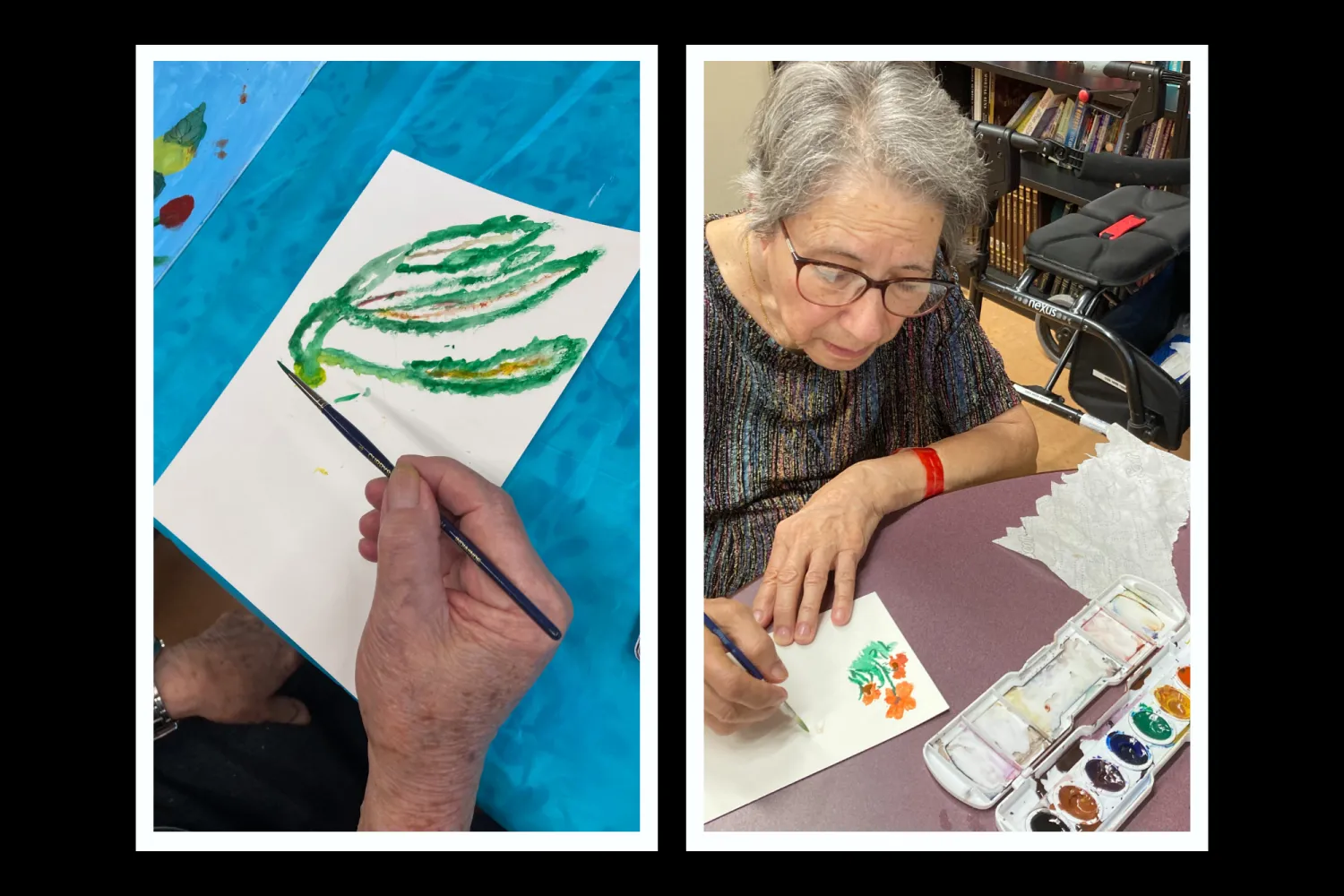
Visual artist, community activator and researcher Erin Finley has a longstanding commitment to arts-based learning and well-being. For more than 20 years, the OCAD University instructor has developed and led art programs that strengthen community, support mental and emotional well-being and foster intergenerational connection.
Her work in long-term care communities uses the power of art to activate memory and enrich daily life. As an active contributor to international scholarship in health and art pedagogy, she engages in research that bridges creative practice with care-based environments.
In 2025, Finley received the University of Toronto OISE Award for Distinguished Service, and between 2018 and 2021, received two teaching awards from OCAD University. Her research projects have been supported by the Canada Council for the Arts, the Toronto Arts Council and the Ontario Arts Council.
OCAD U caught up with the award-winning educator to learn more about her Memory Drawing project.
Tell us more about the Memory Drawing project and what inspired you to explore this topic?
The Memory Drawing project is about exploring how drawing can support cognitive recall, emotional expression, and personal storytelling among older adults living in long-term care. The project examines how creative practices can help individuals, particularly those experiencing memory loss or transitions in aging, reconnect with their histories and make art based on meaningful symbols and experiences.
My mother, Elinor, was an artist who combined elements of memory, wellness, and community building in her studio practice. She was primarily a portrait painter and she also developed collaborative art events for my friends and family when I was a child.
After she passed away 20 years ago, her creative approach continued to guide me, shaping the path I now follow as an artist and researcher. In her honour, I call my research, Project Elinor, a body of work grounded in the belief that art can hold memory and profoundly impact lives.
This project is also deeply informed by my training in multilingual and ELL education, which has taught me to value multiple modes of communication and to recognize that expression is not limited to verbal language.
Many residents in long-term care, particularly those living with dementia, aphasia, or linguistic barriers, communicate through gestures, imagery, rhythm, and sensory recall. My background helps me create inclusive drawing sessions that honour these diverse ways of knowing.
Through collaborative drawing sessions, participants revisit meaningful life experiences, engage with sensory memory, and render images that emerge from personal narratives. This approach was inspired not only by my mother’s belief in art as a tool for remembrance, but also by the need I witnessed in long-term care settings for creative practices that affirm residents’ histories and sense of self.
What drew you into this field of study in the first place? Was there a turning point or defining moment?
Absolutely. My path into this field was shaped by a defining moment while I was teaching a Memory Art course at Workman Arts, part of the Centre for Addiction and Mental Health (CAMH). One day, a student told me that attending my class had saved her life. She meant it quite literally: her mental health had reached a crisis point, and through the support she received at CAMH, she eventually stabilized. But it was her experience in the art class that gave her a sense of connection and grounding during that critical time.
That moment shifted everything for me. It made clear that when people gather to create art rooted in their meaningful memories, something powerful happens. Psychologist Dr. Adam Grant describes calls this phenomenon "collective effervescence," the uplifting energy we feel when we share a creative or emotional experience with others.
Witnessing its impact, I knew I wanted to dedicate my career to exploring how art could support well-being. That single interaction opened a world of possibility: the recognition that art is not just expressive, but restorative; not just personal, but communal. With art, anything is possible. That belief continues to shape my research and practice today.
What question is your research trying answer, and why is this important?
My research is guided by a central question: How can drawing-based practices support well-being, identity, and connection for older adults living with dementia or long-term illness?
I investigate how creative engagement can stimulate memory and foster social connection in long-term care environments, where residents often experience isolation or a diminishing sense of self.
This work also responds to the need for accessible, non-clinical approaches that can complement formal therapeutic techniques in art, drama and music therapy. By examining how simple creative activities can be integrated into everyday care, my research aims to broaden what is possible within arts-in-health contexts.
Grounded in ethical, trauma-informed, and anti-oppressive practices, this research highlights the essential role the arts can play in supporting dignity, storytelling, and community-building, especially for individuals navigating the vulnerabilities of aging and memory loss.
How do you see your research affecting people’s lives in the real world?
I see my research contributing to the field by demonstrating that meaningful, arts-based engagement in long-term care is both achievable and impactful. My goal is not only to expand my own outreach projects, but also to show others, including artists, students, caregivers, and community members, that they can bring similar practices into their own communities. You don’t need special artistic talent to make a difference; you simply need the willingness to connect with a long-term care home and the time to show up with care and curiosity.
By developing accessible models of memory drawing and creative engagement, my research offers practical tools that can improve residents’ well-being, strengthen community bonds, and support compassionate approaches to aging.
Although I have exhibited art internationally and created work before large audiences, the most affirming creative moments in my career have come from working directly with older adults. I hope these findings help others discover the same potential, using art to enrich lives and foster connection where it is needed most.
Are you working with any collaborators, institutions, or funding bodies on this project?
I am grateful for the support of the Canada Council for the Arts, whose funding helped me launch this program and sustain work with long-term care residents during the period when they were hit hardest by the pandemic.
I am also thankful to the Ontario Arts Council, which supported my work with older adults during my time as an artist-in-residence at the Al and Eurithe Purdy, Purdy A-frame Association in Ameliasburgh, Ontario. I will be collaborating with them again next summer.
In addition, I partner with a range of collaborating institutions, including long-term care facilities and community centres, to ensure this work reaches the people who benefit from it most. Support of this kind enables me to reach as many long-term care residents and seniors’ associations as possible.
What do you hope people—both inside and outside of your field—take away from your research?
I hope people come away with the understanding that art is not a luxury in long-term care; it is a vital form of human connection.
My research demonstrates that creative engagement can meaningfully support memory and identity, even for individuals navigating dementia, illness, or significant transitions in aging. I want people to see the value of simple art practices as part of a broader care ecosystem. These practices can coexist with clinical therapies while offering their own distinctive benefits.
For those outside the field, I hope the takeaway is that you do not need to be a professional artist or researcher to make an impact. Small acts of creativity, offered with intention, can enrich daily life and affirm a person’s sense of self. My hope is that people feel empowered to bring imaginative activities into their own communities, knowing that these gestures can foster connection and joy.
Ultimately, I hope people understand that this is not just meaningful work; it is a deeply meaningful career rooted in compassion and creativity. Aging and memory loss do not diminish a person’s capacity for imagination or expression. Art can open pathways to meaning at every stage of life. Everyone has a role to play in making that possible.