401 Richmond Illustration Studio
OCAD University’s RBC Centre for Emerging Artists & Designers is excited to announce the return of the 401 Richmond Illustration Studio for graduating Illustration students.
April 27, 2026

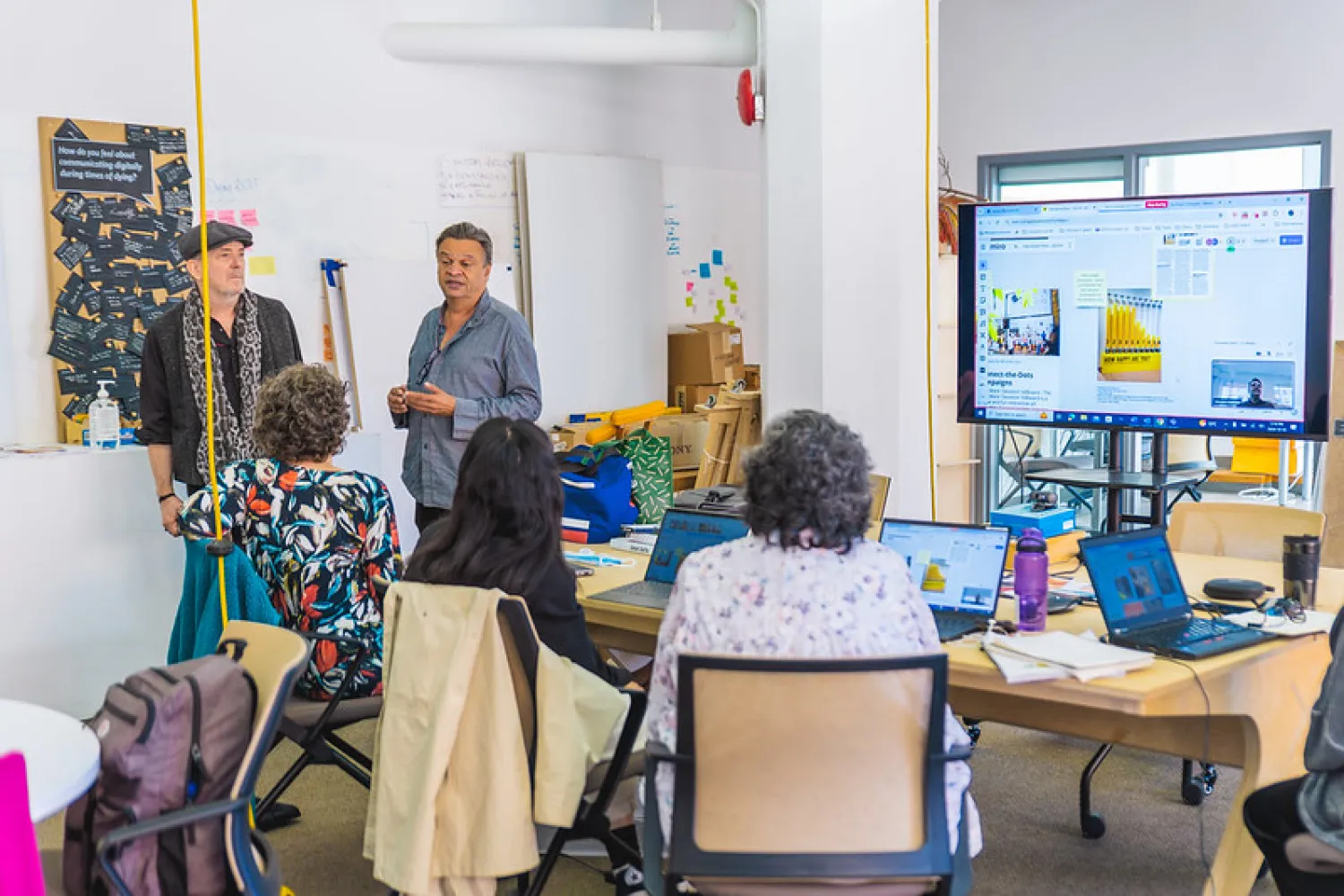
OCAD University has received funding through the Social Sciences and Humanities Research Council’s (SSHRC) Destination Horizon Grants to examine PhD programs in the creative arts globally, with a focus on European Union countries, the UK and Canada.
The project, “Transforming the arts through doctoral education models,” is being led by Dr. Ashok Mathur, OCAD U’s vice-president of Research and dean of the School of Graduate Students. Collaborators include Justin Langlois of Emily Carr University of Art + Design, Kyla Mallett of NSCAD University, Dr. Peter Ride of Memorial University and Dr. Yoke-Sum Wong of Alberta University of the Arts.
The catalyst for the project, which received $15,000 in funding, is the current transformative shift taking place in doctoral education in art and design.
Traditionally, the Master of Fine Arts (MFA) has been the terminal degree in these fields. However, there has been an emergence of practice-based PhDs that integrate artistic practice with rigorous research, supporting broader objectives in interdisciplinary knowledge creation, collaboration, and societal impact.
As a result, these programs are uniquely positioned to address the challenges and opportunities presented by a digitally globalized art ecosystem, enabling artists, scholars and institutions to explore new forms, audiences and impacts.
The concept of practice-based PhDs began to take shape in Europe in the late 20th century. Institutions like the University of Brighton and the Royal College of Art (RCA) in the UK pioneered this approach.
For example, the RCA offers MPhil/PhD programs in Art and Design, providing expert supervision across studio practice, art and design history and theory, curating, and criticism. These programs strengthen knowledge and understanding by leveraging perspectives across multiple disciplines and sectors, fostering interdisciplinary inquiry that enriches both theory and practice.
The OCAD U-led project involves a concerted effort to consolidate doctoral level studies globally as one of the primary indicators of ongoing and future research in art and design practice. Central to the project is enhancing the reputation, interconnectedness and fluidity of creative practice PhD programs across diverse international contexts, including the EU, UK and Canada.
By promoting cross-pollination between institutions and fostering networks of scholars and practitioners, practice-based doctoral education can help to establish new standards of excellence and expand the cultural, intellectual, and social impact of the arts within and beyond academia.