401 Richmond Illustration Studio
OCAD University’s RBC Centre for Emerging Artists & Designers is excited to announce the return of the 401 Richmond Illustration Studio for graduating Illustration students.
April 27, 2026

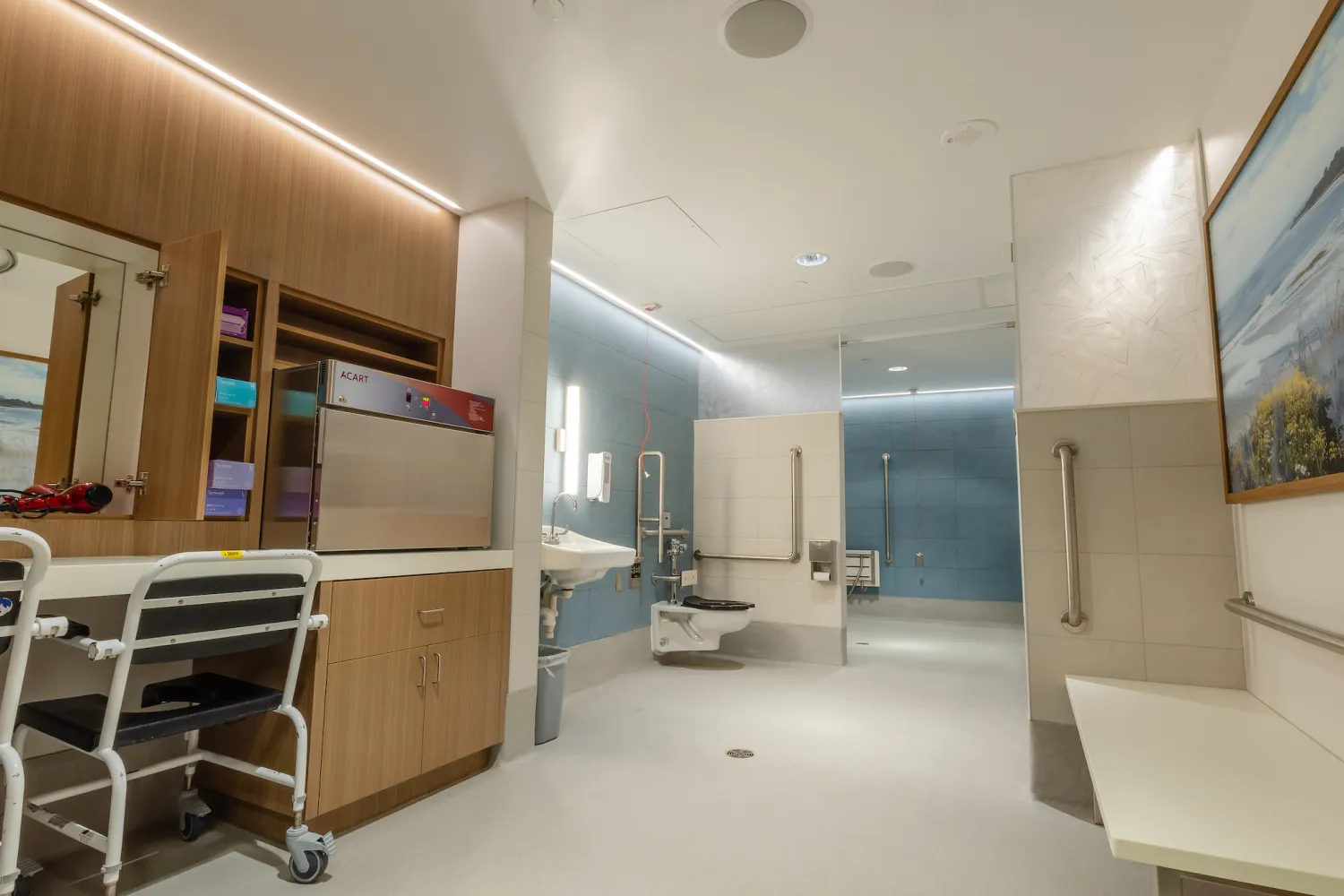
A redesigned, dementia-friendly shower room, now in use on the Specialized Dementia Unit at the University Health Network’s (UHN) Toronto Rehab University Centre, was developed in collaboration with OCAD University's Design for Health graduate program.
The project progressed from a faculty-guided graduate design studio to collaborative research, led by UHN's KITE Research Institute, to a built space designed to support a calmer, more dignified bathing experience for people living with dementia.
THE DESIGN STUDIO: WHERE IT STARTED
The journey started with OCAD University's Design for Health Spatial Studio, an architectural design course that partners with health-care organizations to offer health and design students learning in real care settings, where they can tackle tangible spatial challenges.
Now led by Associate Professor and Chair of Environmental Design Maya Mahgoub-Desai, the studio was originally co-developed by Desai and Associate Professor Bruce Hinds, with research methods input from Dr. Kate Sellen.
It guides students through the full evidence-based design process, from research planning and stakeholder engagement to the development of creative spatial concepts, in partnership with institutions, including Toronto Rehab Institute, SickKids, Toronto Western Hospital, Providence Healthcare, and North York General.
The Spatial Studio’s collaboration with Toronto Rehab University Centre’s Specialized Dementia Unit (then 5 South Geriatric Psychiatry), under the direction of Dr. Ron Keren, focused on making the environment more dementia-friendly, with the existing shower rooms quickly standing out as a major challenge for residents and caregivers.
The students' resulting report, Proposed Environmental Redesign for 5 South Geriatric Psychiatry, provided the seed for subsequent research and, ultimately, the built shower room.
“Experiential learning is central to this studio,” says Desai, who co-led the original Toronto Rehab University Centre design studio. “Students work closely with clinical teams on real-world challenges and design questions that directly affect patients, families and staff.”
Dr. Andrea Iaboni, a KITE scientist, geriatric psychiatrist and medical lead of the Specialized Dementia Unit, describes it as “a success story involving moving ideas generated by students in an OCAD University studio course…to a research project funded by the Centre for Aging + Brain Health Innovation, and then collaborations with community members, families, and staff…that informed the translation of this research to design, build and evaluation of a health care space.”
FROM DESIGN STUDIO TO RESEARCH
The design studio work and long-term partnership opened the door to a deeper research collaboration between OCAD U and KITE at UHN.
“The OCAD U team came and evaluated all the spaces in our unit in terms of how they could be improved for design in dementia, and the shower rooms really stood out as a particular pain point,” says Dr. Iaboni, who led the research, bringing together KITE clinicians and scientists with OCAD U faculty Desai and Hinds and graduate researchers. Together, they conducted a broad evidence-mapping review of what is known and where gaps remain, resulting in a publication.
The research findings were published in the Journal of the American Medical Directors Association (Konda et al., 2025), “Best practices for the design and evaluation of bathing spaces for older adults with cognitive impairment in residential care settings: A scoping review.”
The scoping review identified 34 best practices, ranging from offering calming sounds and concealing institutional fixtures to using temperature-regulated showerheads, creating warmer rooms, improving privacy, and reducing glare, noise, and echoes, along with recommendations for staff training, resident choice, and mindful communication. Many of these themes echoed what the design studio had surfaced years earlier.
THE NEW SHOWER ROOM
The redesigned shower room puts those ideas into practice. According to UHN, the space “was redesigned to create a warmer, more calming environment.” It includes a larger, accessible shower, softer lighting, a heating panel and towel warmer, a place to sit and change, a grooming area, calming artwork, slip-resistant flooring, and an accessible toilet, within a more spacious layout.
Staff are also being trained on improved shower care procedures, including personalized approaches and building trust with patients.
While formal evaluation is underway, Dr. Iaboni reports: “Our impression is that this new shower space has made a big difference and had a big impact. It's more serene, calming and less claustrophobic, and provides lots of options to support patients who are receiving their showers.”
LOOKING AHEAD
The shower room is part of a broader plan to redesign the unit, including a quiet activity room, more visible dining and cooking spaces, and improved lighting to support safety and sleep.
“We're constantly trying new design innovations to make things better," says Dr. Iaboni. "The treatment, in many cases, is to change the environment.”
The project traces a full arc from a graduate design studio brief to research evidence to a built hospital space.
“Architectural design isn't cosmetic. It shapes how people behave, how care is
delivered, and whether someone experiences dignity, respect and belonging,” says Desai.
Source for this article:
This story incorporates content from the University Health Network. (February 3, 2026). Innovative shower room for people with dementia.