Out of Line: 150 Years of Supporting Creative Defiance at OCAD U
Exhibition
Alumni
Faculty
Graduate Student
International Student
Public
Staff
Undergraduate Student
November 24, 2026 – February 14, 2027
(hours: Nov 24 - Dec 20, Mon to Sat 11am - 5pm)
Opening Reception November 24th 6pm to 8pm
Rouzbeh Akhbari, Michael Belmore, Petra Collins, Aaron Jones, Ginette Legare, Jennifer Marman & Daniel Borins, Jason Mendiola, Alex McLeod, John Masey, Katharine Mulherin, Fin Simonetti, Geoffrey Pugen, Harold Town
100 McCaul St.
100 McCaul St.
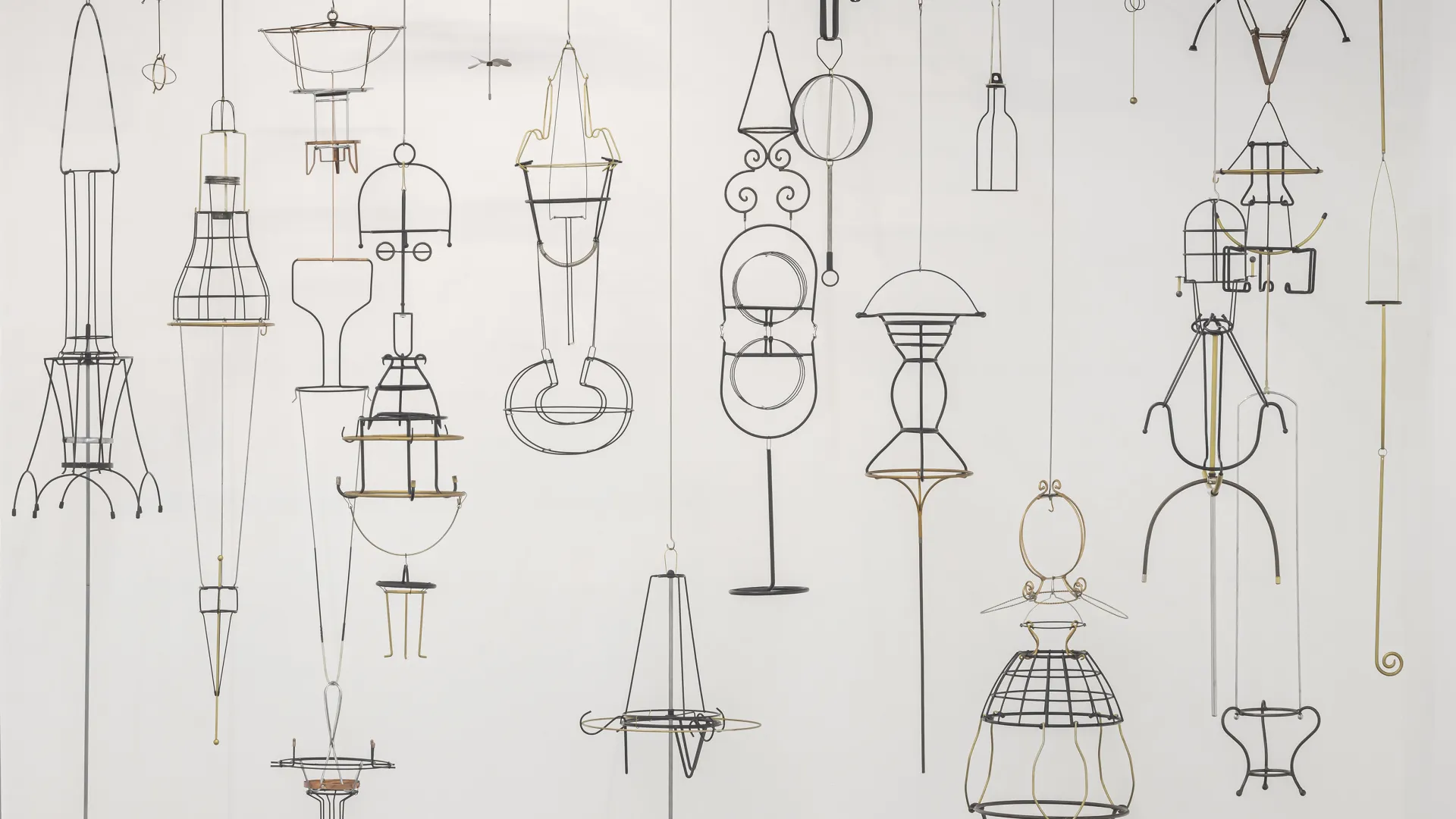
Ginette Legaré: Jury Pool
rgb(255,255,255)
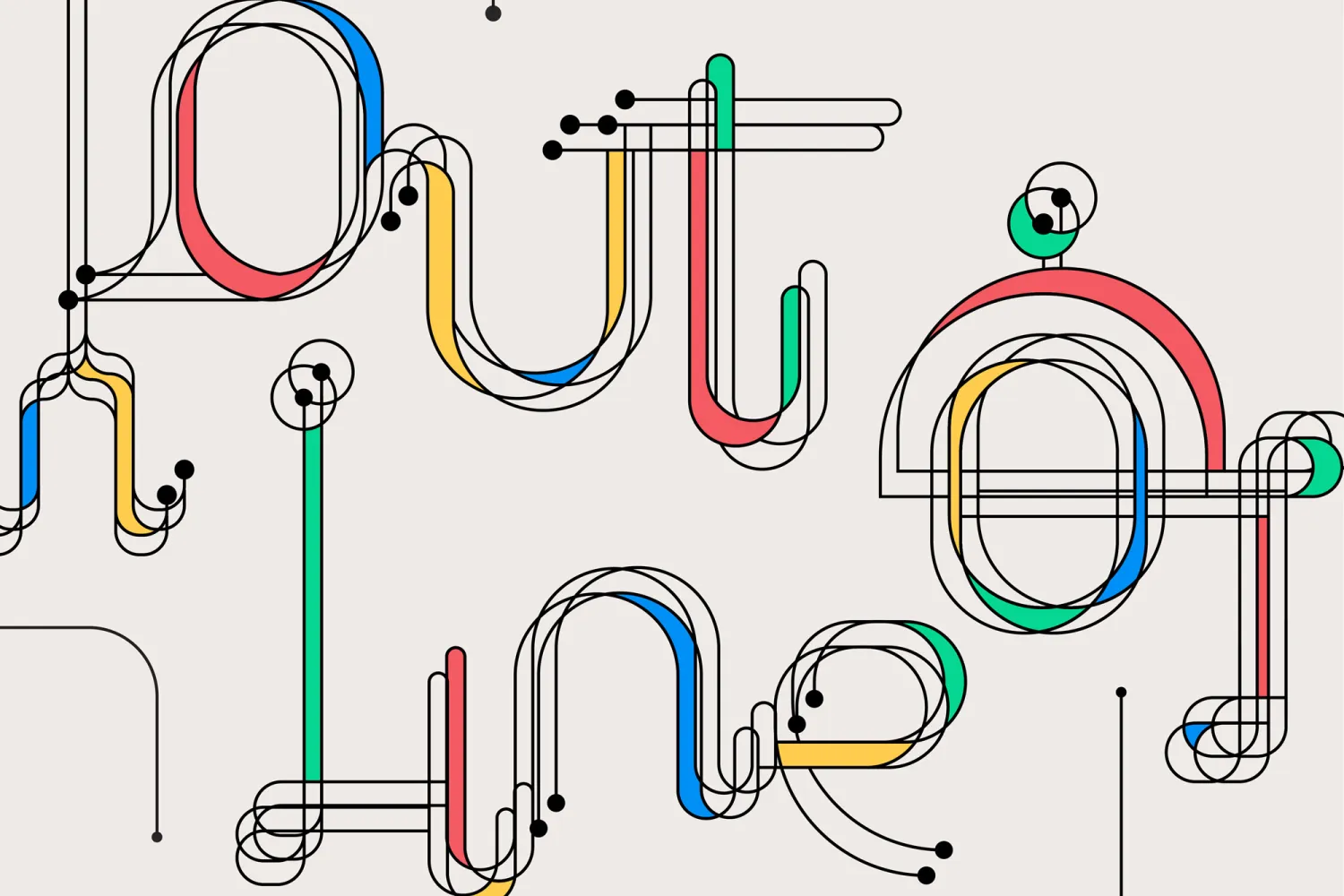
Out of Line marks OCAD University’s 150th anniversary with a pointed declaration of purpose and positions the institution not merely as a site of technical training or aesthetic refinement, but as a long-standing incubator of disruption. The Student Galleries have gathered notable alumni and long-time faculty within Ignite Gallery and the Ada Slaight Exhibition Centre whose practices embody this refusal. The artists—Rouzbeh Akhbari, Michael Belmore, Petra Collins, Aaron Jones, Ginette Legaré, Jennifer Marman & Daniel Borins, Jason Mendiola, Alex McLeod, John Masey, Katharine Mulherin, Fin Simonetti, Geoffrey Pugen, and Harold Town—do not form a school or style. What binds them is a shared willingness to step across boundaries, to trouble conventions, and to keep culture unsettled in the interest of possibility.
The artists assembled share a spirit of creative disruption, which Out of Line posits finds resonance in the figure of the trickster. The character of the trickster exists across traditions of mythology, folklore, and religion. They creatively use intellect, secret knowledge, or cunning to break rules, defy conventional behavior, and challenge authority. The trickster appears as boundary-crosser, shape-shifter, and agent of necessary chaos. In many Indigenous North American cultures, Coyote is both creator and fool, culture-bringer and destroyer of order. Coyote steals fire, invents death, invents sex, invents the very conditions of human life, yet does so through appetite, error, and irreverence. The Greek Hermes, messenger and thief, invents the lyre from a tortoise shell, steals Apollo’s cattle, and guides souls between worlds; he is the god of thresholds, commerce, and cunning speech. Norse Loki is blood-brother to Odin, mother of monsters, and catalyst of Ragnarök; without Loki’s transgressions the cosmic order grows static and brittle. In the late twentieth-century mythology of Star Trek: The Next Generation, Q is an omnipotent being who repeatedly subjects humanity—and Captain Picard in particular—to trials that expose the limits of reason, morality, and species self-importance. Q’s interventions are rarely kind, yet they force growth. These figures do not destroy for destruction’s sake. They disrupt so that something new, or something truer, can emerge.
Tricksters are always on the scene, attempting to show culture its shadow and the inevitable changes that are afoot. In mythological terms, the battle between the forces of creation and destruction, as typified by trickster polarity, remains as alive in the modern world as it was for our ancestors. Trickster makes its way to the world stage via the psyche of the individual. We must come to terms with inner conflicts in order to gain more clarity about the outer conflicts in which culture seems mired. The integration of the trickster archetype allows movement from being ruled by a self-centred ego toward a way of living marked by integrity and relatedness. It permits awareness of the true emotions, behaviours, and thoughts that the unconscious persona conceals—and without which there is no individuation. Trickster allows discovery of the Self, the totality of the personality that unites the opposites of consciousness and the unconscious and holds everything together in balance and unity. Trickster attempts to wake us up and, in the process, shake us to the core of our being. Perhaps this is because the figure embodies fundamental patterns that we fiercely struggle with and desperately need to reconcile within ourselves and our world. Through negotiating and disrupting conventions and boundaries, trickster broadens the realm of human potential. While trickster may bring difficult lessons, the same force allows us to imagine and create entirely new possibilities. As one formulation of the tradition puts it: “In the history of the collective as in the history of the individual, everything depends on the development of consciousness. This gradually brings liberation from imprisonment in unconsciousness, and [the trickster] is therefore a bringer of light as well as of healing.”
Out of Line stages this work of disruption and potential illumination across media and generations. Harold Town, who studied at the Ontario College of Art in the early 1940s, stands as an early and forceful presence. A co-founder of Painters Eleven, Town helped force abstract painting into Canadian public consciousness at a time when such work was still regarded with suspicion. His restless movement across painting, printmaking, collage, and illustration, combined with a public persona of unapologetic confidence, enacted a form of artistic defiance that refused both provincial conservatism and imported orthodoxies. Town’s career demonstrates that creative disruption at OCAD U is not a recent fashion but a historical through-line.
Michael Belmore, an Anishinaabe sculptor who graduated from OCAD in 1994, works primarily in stone, copper, and other resistant materials. His sculptures and installations speak of land, water, and the consequences of human intervention in watersheds and landscapes. By treating materials as animate and collaborative rather than as inert resources, Belmore challenges extractive habits of thought. The slow, deliberate processes of carving granite or chasing copper enact a temporal resistance to the accelerated consumption that dominates contemporary culture. In the presence of his work, the viewer is invited to reconsider the relationship between human time and geological time—an invitation that carries the ethical weight of Coyote’s more serious teachings about consequence.
Ginette Legaré, Professor Emerita at OCAD University, has long worked with recovered and discarded objects. Her mixed-media constructs and installations explore the social, cultural, and perceptual contexts that objects carry. By redeploying fragments whose original functions have expired, Legaré reveals the chains of production, desire, and obsolescence that structure everyday life. Her practice is a quiet but persistent form of defiance against the seamless surfaces of consumer culture; it insists that meaning can still be wrested from what has been thrown away.
Jennifer Marman and Daniel Borins have co-authored artwork since 2000; both graduated from OCAD in 2001. Working across installation, painting, large-format sculpture, and electronic media, Jennifer Marman and Daniel Borins draw on the visual language of popular culture to contrast and reassess theories and polemics in twentieth-century art history. Accordingly, their practice interprets the information age and its social implications, tracing how images circulate through remixes and speculative narratives. The duo considers contemporary art's openness to structures and meanings as foundational. Like Hermes guiding souls or Q staging trials, their environments place the spectator in a position of agency and uncertainty.
Alex McLeod creates hyper-real digital landscapes and simulations that blur physical matter and rendered possibility. Working with software such as Cinema 4D and Unreal Engine, he constructs luminous terrains that grow, erode, and recombine under algorithmic conditions. These worlds evoke both Romantic landscape traditions and the uncanny familiarity of video-game environments. McLeod’s practice stages the tension between the virtual and the real, between control and contingency—an updated version of the trickster’s negotiation of boundaries between ordered cosmos and chaotic potential.
Fin Simonetti, who received her BFA from the Ontario College of Art and Design in 2009, works in sculpture and stained glass. Her forms often address the entangled relationship between measures of control and desires for security. Pit-bull heads carved in marble, protective yet vulnerable architectures in glass, and objects that hover between threat and safeguard tap into visceral fears while refusing simple resolutions. The stained-glass tradition, linked in her family history to Italian immigrant craftsmanship, becomes a medium for examining power, protection, and fragility.
Rouzbeh Akhbari, who earned a BFA in Sculpture and Installation at OCAD University, works across film and installation to investigate the political and ecological entanglements of trade, infrastructure, and borders. His projects trace how forces of empire continue to be inscribed in material landscapes, often focusing on informal economies and the frictions of movement. By combining documentary fieldwork with poetic speculation, Akhbari unsettles official narratives of circulation and control.
Petra Collins, who studied at OCAD University, developed a photographic and directorial practice that helped redefine the visual language of contemporary girlhood and femininity. Her images, frequently characterized by a distinctive feminine and dreamlike aesthetic informed by a modern female gaze, challenged prevailing media depictions of young women’s bodies and experiences. Through both personal projects and high-profile commercial and music-video work, Collins expanded the range of what could be seen and how it could be framed.
Geoffrey Pugen explores alternate realities through video, photography, and installation, often simulating and re-contextualizing media histories while contemplating speculative futures, transhumanism, and conflicts between the virtual and the real. His more recent work integrates screen technologies into sculptural and architectural forms, creating environments in which technology and nature, presence and absence, continually renegotiate their relations.
Katharine Mulherin, who studied at the Ontario College of Art and later became a pivotal gallerist, represents another mode of creative defiance: the creation of spaces in which disruptive work could appear. Opening BUS gallery in Parkdale in 1998 and subsequently expanding across Queen Street West and into New York and Los Angeles, Mulherin championed emerging and unconventional artists, often operating at the edge of commercial viability. Her galleries functioned as much as artist-run centers as commercial enterprises, fostering a scene that valued risk and idiosyncrasy.
Aaron Jones, who graduated with a BFA in Photography from OCAD U in 2018, works across collage, photography, video, and installation to explore identity, futurity, and world-building. Drawing on found images, personal archives, and lens-based media, he constructs layered characters and spaces that reflect the nuances of Black experience, belonging, and the search for peace. His practice demonstrates a consistent commitment to transforming the everyday into speculative, resonant environments.
Jason Mendiola, a recent OCAD U graduate, works at the intersection of sculpture, motion, and modular systems. Rooted in metal fabrication and emergent technologies, his practice examines how material structures become relational fields shaped by perception, time, and ambient movement. Engaging affect theory, proprioception, and ideas of persistence and becoming, Mendiola constructs skeletal architectures and motorized forms that rotate, hover, or shift—transforming materials into objects suspended in states of desire, latency, and transformation. His kinetic and modular works invite viewers into a heightened awareness of bodily and temporal experience.
John Massey, who studied at the Ontario College of Art and later taught Experimental Arts there in the early 1980s, has long worked across installation, sculpture, film, photography, and digital manipulation. His practice occupies the unsettled middle ground between the depicted and the created, using conventional photography combined with subtle digital intervention to question perception, memory, and the architecture of both personal and public space. Works that inhabit the threshold between dream and reality, presence and absence, continue Massey’s decades-long investigation into how images shape—and are shaped by—our understanding of the real.
The artists in the exhibition extend these concerns through their own practices, contributing further variations on themes of material transformation, cultural memory, and formal invention. Together the group demonstrates that creative defiance at OCAD U has never been monolithic. It appears as formal experimentation, as material ethics, as spatial intervention, as institutional invention, and as the persistent questioning of whose stories and whose bodies are granted visibility.
Out of Line does not present these artists as a triumphant lineage marching toward progressive enlightenment. The trickster’s gifts are rarely pure. Disruption can wound; boundary-crossing can leave wreckage. Yet the exhibition insists that the alternative—settled forms, unexamined conventions, culture without its shadow—is more dangerous still. By gathering these practices under one roof in the student galleries, the exhibition returns the university’s history of creative defiance to the site of its ongoing education. Current students encounter not only finished works but living examples of artists who refused the line.
In an era marked by accelerating technological change, ecological crisis, and polarized public discourse, the need for figures and practices capable of revealing culture’s shadow is acute. The artists in Out of Line do not offer solutions so much as they model a stance: the willingness to negotiate and disrupt conventions in order to broaden the realm of human potential. Their work, like the trickster figures that haunt the cultural imagination, can shake us to the core. In doing so, it keeps open the possibility of individuation—personal and collective—and of a consciousness capable of holding opposites in tension rather than collapsing into dogma or despair. One hundred and fifty years after its founding, OCAD University continues to support the difficult, generative labour of those who work out of line. The exhibition is both celebration and summons: a recognition of what has been achieved and an invitation to keep the boundaries moving.
Curated by Morgan Mavis and Tibi Neuspiel
rgb(255,255,255)

Please be advised that OCAD U hosted events may be documented through photographs and video. These images may be used by the University for promotional, advertising, and educational purposes. By participating in our events, both on campus and off-site, you consent to allowing OCAD University to document and use your image and likeness. However, if you do not want us to use a photo or video of you or your child, please don’t hesitate to let us know when you arrive at the event. You’re also welcome to get in touch with OCAD University’s Marketing & Communications office: communications@ocadu.ca.
Be mindful of those in our community who have scent sensitivities; please help OCAD U maintain a healthy, scent-free campus.