
Dr. William Paris: The Antinomies of Emancipation in Frederick Douglass's My Bondage and My Freedom
Talk
Alumni
Faculty
Graduate Student
International Student
Public
Staff
Undergraduate Student
Dr. William Glass (University of Toronto) presents his Guest Speaker Lecture at OCAD University.
115 McCaul Street
3rd Floor
1 - 2 p.m.
Faculty of Arts & Science
Faculty of Arts & Science
Free
115 McCaul Street
3rd Floor
1 - 2 p.m.
Faculty of Arts & Science
Faculty of Arts & Science
Free
rgb(255,255,255)
Dr. William Paris: The Antinomies of Emancipation in Frederick Douglass's My Bondage and My Freedom
A talk by Dr. William Paris, hosted by the Faculty of Arts and Science's Liberal Studies program
- March 19, 2026
- 1:00-2:00pm
- 115 McCaul Street, 3rd Floor (CEAD), OCAD University
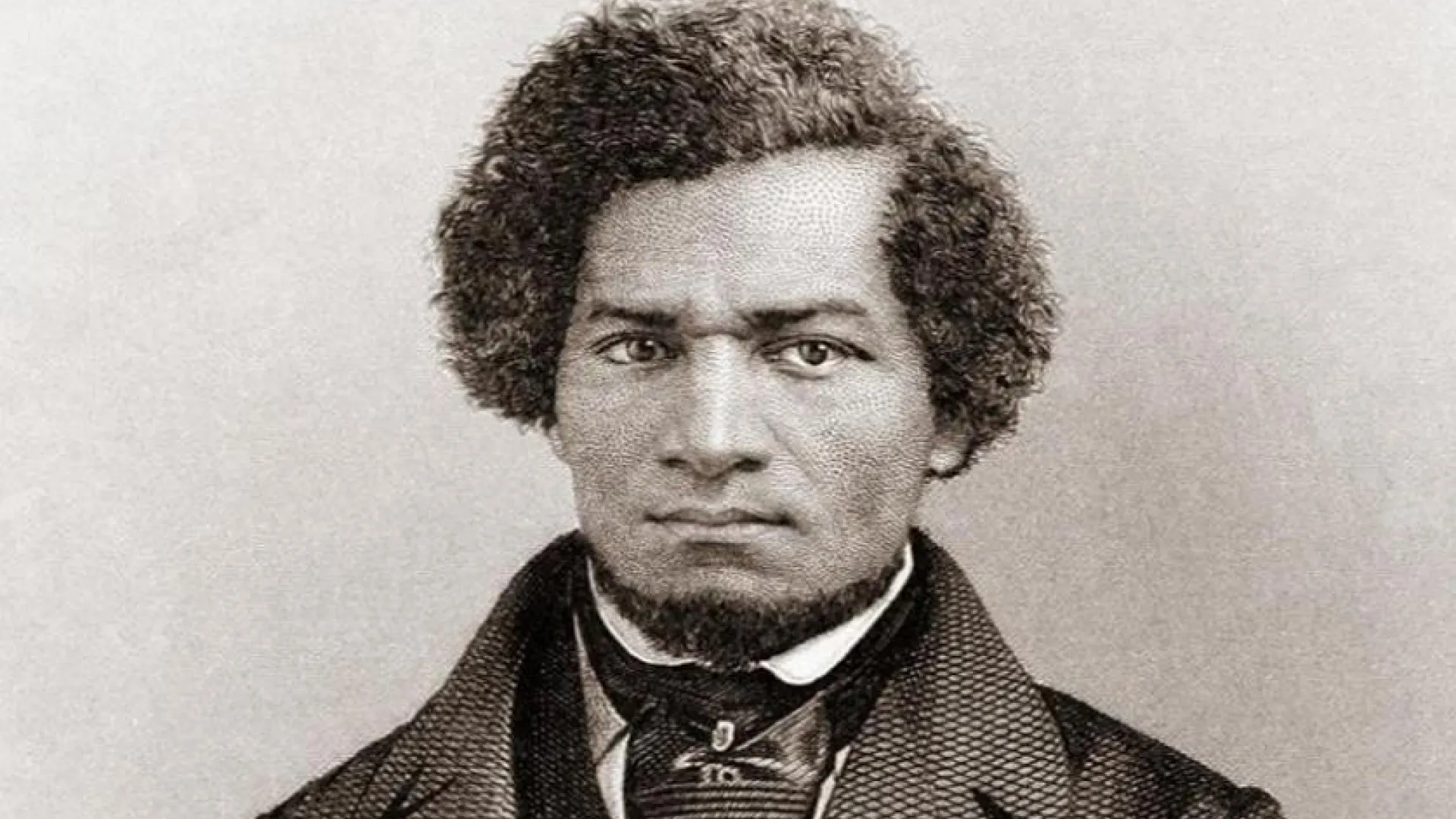
Talk Description: That the emancipation from slavery is the central theme of Fredrick Douglass's autobiography is indisputable. But the climatic moment of emancipation in the autobiography where he proclaims that he was "a freemen in fact, while I remained a slave in form" is remarkably ambiguous. How can one be both free and a slave? The aim of this talk is to unpack the antinomic structure of Douglass's autobiography as a specifically literary matter. The attempt at self-narrating a book of freedom from within a society still entrenched in slavery offers a sense of how emancipation must be indivisible even as the domination of slavery relentlessly divides the enslaved against themselves. Taking seriously My Bondage and My Freedom as a work of art allows us to see how Douglass grasped something of our modern condition: we are both free and bound.
Dr. William Paris:
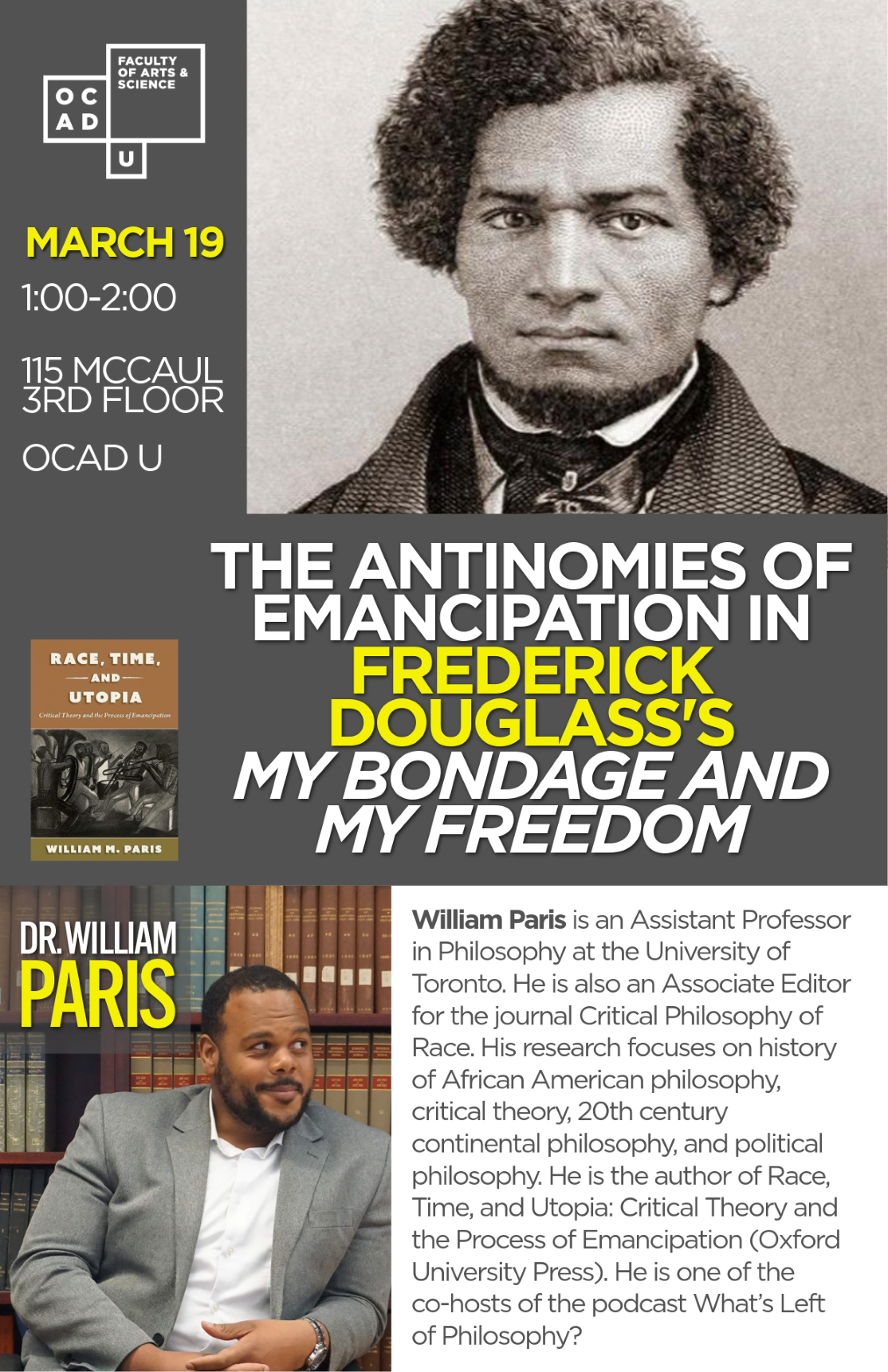
William Paris is an Assistant Professor in Philosophy at the University of Toronto. He is also an Associate Editor for the journal Critical Philosophy of Race. He is one of the co-hosts of What’s Left of Philosophy? His research focuses on history of African American philosophy, critical theory, 20th century continental philosophy, and political philosophy. He is the author of Race, Time, and Utopia: Critical Theory and the Process of Emancipation (Oxford University Press). He has published on critical theory and self-emancipation, Frantz Fanon and gender, Sylvia Wynter's phenomenology of imagination, and C.L.R. James and Hannah Arendt. He has also published articles on subjects concerning critical theory and utopian consciousness as well as a defense of the explanatory work of critical theory vis-à-vis race in Puncta and Critical Philosophy of Race. He has recently published an article in the New German Critique on critical theory and self-emancipation.
Please be advised that OCAD U hosted events may be documented through photographs and video. These images may be used by the University for promotional, advertising, and educational purposes. By participating in our events, both on campus and off-site, you consent to allowing OCAD University to document and use your image and likeness. However, if you do not want us to use a photo or video of you or your child, please don’t hesitate to let us know when you arrive at the event. You’re also welcome to get in touch with OCAD University’s Marketing & Communications office: communications@ocadu.ca.
Be mindful of those in our community who have scent sensitivities; please help OCAD U maintain a healthy, scent-free campus.