Call for Project Participants: From Our Points of View Encounters with Artists
A student-led year-long visiting artist project, under the mentorship of Governor General's Award winning artist Max Dean
September 30, 2026

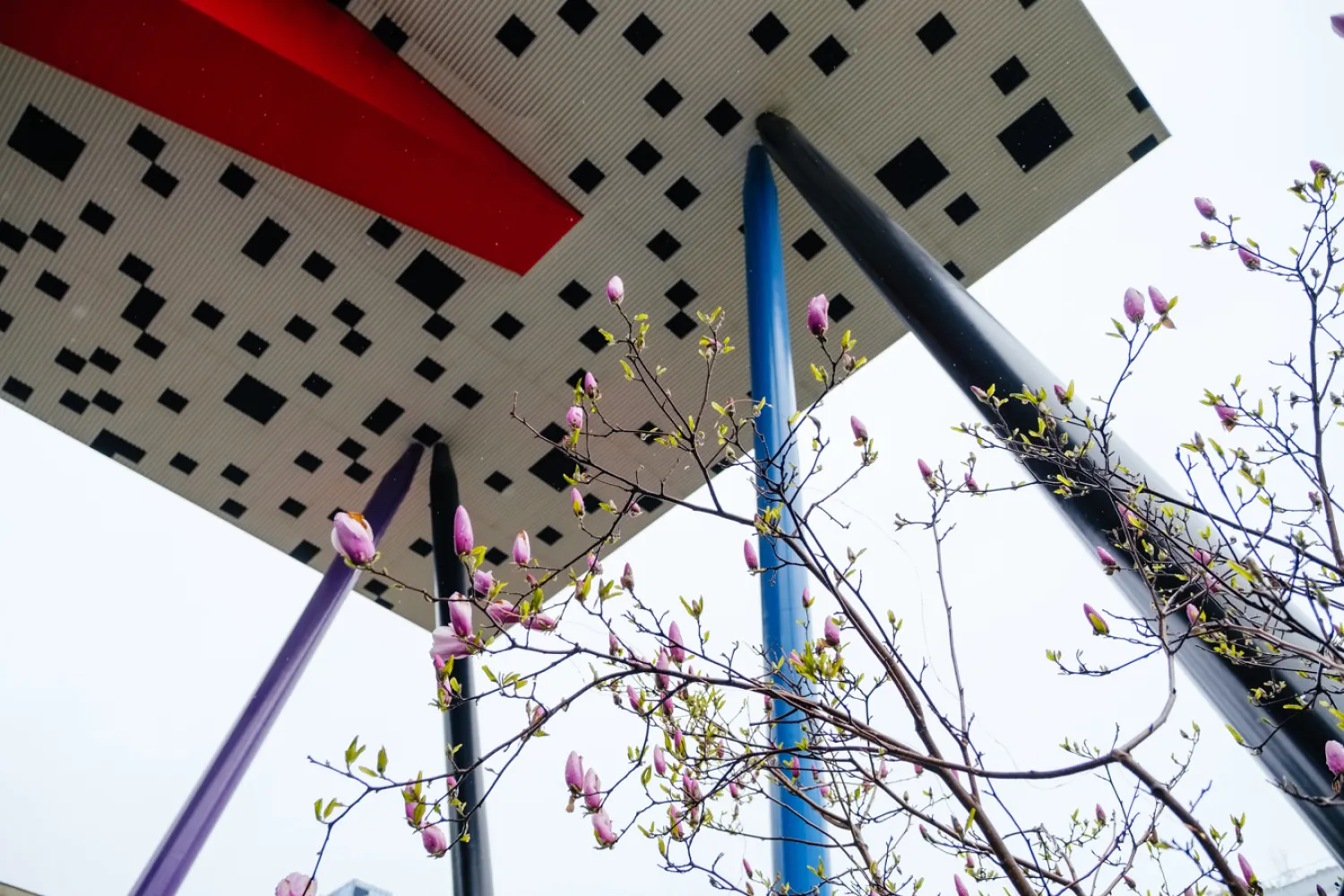
OCAD University’s multi-year decarbonization plan will lower energy use and carbon emissions on campus, moving the institution towards becoming a carbon-neutral campus in the coming decade.
At the core of the University’s decarbonization efforts is eliminating and offsetting on-site burning of fossil fuels. This involves replacing older inefficient gas-burning equipment with non- or reduced-carbon producing alternatives, often referred to as fuel-switching.
As a result, the University needs to replace the heating, ventilation and cooling (HVAC) system with higher efficiency alternatives, such as heat pumps or electrically heated water systems. This is a huge undertaking at 100 McCaul St. with 45 rooftop units, two large heating boilers, and two domestic hot water tanks that need to be replaced.
The University recently began the process of replacing the rooftop mechanical units at 100 McCaul St. by reinstalling five new units and upgrading the electrical supply.
In fact, these fuel-switching efforts will eliminate 65 per cent of our carbon production in the buildings at 100, 115 and 74-76 McCaul St.
When it comes to energy consumption (gas and electricity) on campus, the University uses the most energy in the 100, 115 and 74-76 McCaul St. buildings. For campus buildings at 113, 49 and 53 McCaul St., the Learning Zone, 205 and 230 Richmond St. W., and 130 Queens Quay West, OCAD U will work with the property and operating to implement efficiencies.
The University has also undertaken several projects in recent years to improve overall energy performance. This has included replacing aging inefficient windows on the south side of the 100 McCaul St. building, upgrading exterior ductwork insulation at 100 McCaul St. and extensive replacement of fluorescent lighting with more efficient LED lighting (an ongoing process across the campus).
The conversion to LED lighting has involved installing LED lighting fixtures in all newly constructed and renovated spaces as well as retrofitting older fixtures with new ballasts and LED bulbs. The completion of this conversion process is April 2027.
OCAD U’s Energy Efficiency and Decarbonization Plan, 2025 to 2030, is aligned with the Academic and Strategic Plan priority, Pursue Environmental Sustainability and the institution’s commitment to improving carbon emissions and energy and water consumption in campus planning, buildings and operations moving towards net zero by 2030.