## Breadcrumb
1. [Home](/)
2. Markdownify
3. Node
4. [Meet OCAD U’s 2026-27 BMO Sustainable Futures Faculty Fellows](/markdownify/node/4884)
October 13, 2026
# Meet OCAD U’s 2026-27 BMO Sustainable Futures Faculty Fellows
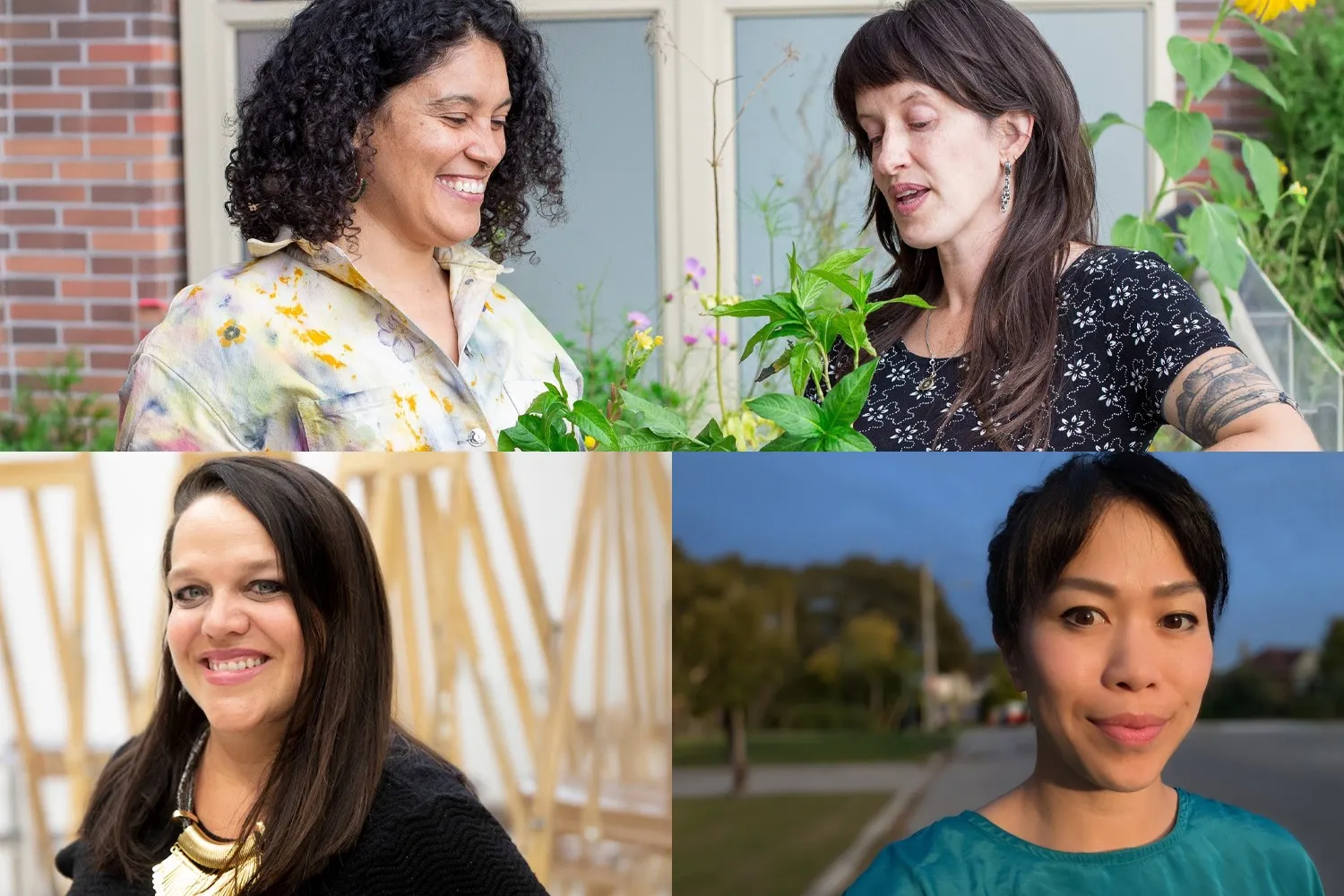
Top: Dr. Alia Weston (left) and community partner Dani Hagel (right); Bottom: Ilene Sova (left); Annie Tung (right).
rgb(255,255,255)
OCAD U is proud to introduce the 2026-27 cohort of BMO Sustainable Futures Faculty Fellows from the [Global Centre for Climate Action](https://www.ocadu.ca/research-and-innovation/research-labs-centres/global-centre-climate-action). Their work demonstrates the critical role art and design can play in addressing the climate crisis.
This year’s 2026–27 fellows are Associate Professor Ilene Sova (Faculty of Art), Assistant Professor Annie Tung (Faculty of Design) and Associate Professor Dr. Alia Weston (Faculty of Arts & Science).
Once again, this year’s cohort reflects the diversity of sustainable practice at OCAD U, exploring how environmental thinking can inspire innovation while drawing on cultural knowledge, heritage and creative practice.
Generously supported by BMO, the fellowship enables faculty to develop innovative, community-based research grounded in OCAD U’s strengths in creative practice, cultural insight and material innovation.
This year’s fellows are advancing sustainability research across four interconnected themes: Materials & Materiality, Cultural Impact, Indigenous Knowledges & Land-Based Practice, and Inclusive Design & Climate Justice.
Their projects demonstrate how interdisciplinary approaches that bring together multiple forms of knowledge and practice can drive meaningful change, while addressing the root causes and cultural dimensions of environmental challenges.
**Ilene Sova ̶ Material Re/Routes**
*Material Re/Routes* is a city-to-campus research project connecting OCAD University with Toronto businesses and industries that generate reusable surplus materials. Paper, wood, fabric, plastics, printing offcuts, display components, and other resources are often discarded or recycled, even though they hold strong potential for artmaking.
The project will build reciprocal partnerships to redirect these materials into studio art education, where this beautiful 'waste' can support student learning, innovative experimentation, and more affordable access to supplies.
Student research assistants will help identify material sources, coordinate collections, document what is diverted, and record how students transform the materials through their work. The research will examine what systems are needed to make this model safe, reliable, sustainable, and adaptable across OCAD U programs.
An exhibition, digital archive, and research talks will showcase the resulting artwork and demonstrate how material reuse can stimulate innovation, strengthen community relationships, reduce waste, and contribute to lasting cultural change in the way we make decisions in art-making practices.
**Annie Tung ̶ Fragile Resilience**
Annie Tung’s project explores whether we can mourn what a species has lost before it is gone. Drawing on the traditions and material qualities of paper, bioplastics and reclaimed metal, she will create memorial objects for one or two species at risk in Ontario.
In 2025, Ontario replaced its Endangered Species Act with the Species Conservation Act, removing provincial protection or recognition for more than 100 at-risk species. No public ritual marked this loss. Guided by Ontario conservation organizations, Tung’s project responds by creating objects that invite reflection on what it means to commemorate a species while it is still here. The use of paper draws on Chinese traditions of burning offerings for the dead, while bioplastics are designed to biodegrade.
The memorial objects will be displayed at OCAD U, where visitors will be invited to name a loss of their own. A hands-on workshop for the OCAD U community will also explore how bioplastics are made. For Tung, the objects and workshop together offer a public ritual of loss ̶ something she believes was missing when these species lost their protection or recognition under the new legislation.
**Dr. Alia Weston ̶ Learning from The Land (Eramosa Farm)**
Dr. Alia Weston is collaborating with community partner Dani Hagel and Eramosa Herbals, a farm in Guelph, Ontario, to explore how art, design, business and economic practices can be reimagined through land-based collaboration.
Together, they are examining the historical and contemporary relationships between land, people, production and labour while growing and tending plants. Their project explores how more sustainable and reciprocal approaches to art, design and business might support ecological justice and create mutual benefit for people and the land.
Dr. Weston and Hagel are stewarding flax to examine the economic and labour practices behind linen production, while exploring circular-economy business models using herbal dyes. Hagel, an interdisciplinary artist and herbalist, has tended the one-acre farm for more than six years as a site for ecological inquiry, artistic experimentation, community education and land-based programming.
Since 2025-26, Dr. Weston and Hagel have been co-learning with the farm, stewarding a dye garden through the Goldenrod Artist Residency, teaching botanical dye workshops and raising funds for Palestinian farm workers. Eramosa provides a hands-on setting for Dr. Weston and Hagel to explore how art, design and business can work in more sustainable and reciprocal ways with the land.
Related Stories
## Related Stories