## Breadcrumb
1. [Home](/index%2Ephp/)
2. Profile
3. [Serena Lee](/index%2Ephp/markdownify/node/2773)
# Serena Lee
Integrated Media, 2008. Artist and Cultural Worker
Contact Information
Graduation Year2008
KeywordsFaculty of Art
Integrated Media
> For my practice, I just try to get into a mode of being receptive to moments, fragments, situations, or angles of architecture. I go see exhibitions, plays, performances, lectures, and then discuss them with friends. I read a lot, swaying between fiction and theory. Sustenance comes largely in the form of community and dialogue.
**Why did you choose to attend OCAD U?**
I was 17, on the day before I was supposed to move to Montreal to study, I was in a car accident; broke my leg, couldn't go to McGill, realized I ought to pursue something that I cared about.
**Please briefly describe your current job / practice.**
A thrilling yet precarious balance that depends largely on where I am living.
**How did you get started in your career?**
In terms of my practice, I am constantly starting - this is an aspiration. I travel. I build and amass new arsenals. My practice takes on different turns with every project; working collaboratively in different cities/countries also means reinventing vocabulary, relationships and contexts. As far as jobs go, I've had a lot of different ones, used a lot of different muscles. Also aspirational, so as not to get numb.
**Did you volunteer or work in your field while you were a student?**
The first few things I did were at the recommendation of OCAD profs while I was a student in the Integrated Media department - I interned with a Nuit Blanche curator and then at Vtape. It was eye-opening to see how things work outside of the classroom, at a different pace and with moving targets; it put the curricular into perspective. I'm really grateful to my profs for their generosity towards their students' development as members of a community beyond the school.
**What were your policies regarding internships, volunteering, and paid work?**
I had no policies - I was happy to do anything. It was a luxurious situation, aided and abetted by my mum whose house I flooded over the course of art school. I was working part-time and had minimal expenses, thus unpaid internships were possible to pursue.
**What do you enjoy most about your work? What is the most challenging aspect of your work?**
I enjoy the work taking on a life of its own and developing its inner logic; when its decisions surprise me. Exhibition is an afterthought. Administrating applications and reports is a perennial challenge. Separating my personal practice from the demands of professional networking in my various organizational roles is also a challenge, but more welcome than paperwork. Maintaining long distance collaborations is also mildly heart-wrenching.
**What skills or relationships developed at OCAD U helped you participate in your field? Is there anything you would have done differently?**
There are so many formative moments of realization that occurred in that INTM corridor and those classrooms overlooking Grange Park. I realized that I could use a computer. I realized that I could take up space. There are plenty of practical skills and the foundation of a conceptual toolbox that have been instrumental, but mostly what I took out of OCAD was the sense that one could pursue an education of just being human. Now, I wish OCAD had prioritized studio practice instead of a strictly curricular structure.
**What are the key responsibilities you maintain for your practice?**
I am figuring this out as I go - in terms of basic survival, I've had a lot of different jobs. This is part of it - the variety is hugely informing. There are administrative tasks of course, meeting application deadlines, boring stuff. For my practice, I just try to get into a mode of being receptive to moments, fragments, situations, or angles of architecture. I go see exhibitions, plays, performances, lectures, and then discuss them with friends. I read a lot, swaying between fiction and theory. Sustenance comes largely in the form of community and dialogue.
**What are your personal and professional goals for the coming years?**
To make things and engage in things I care about, with people I care about.
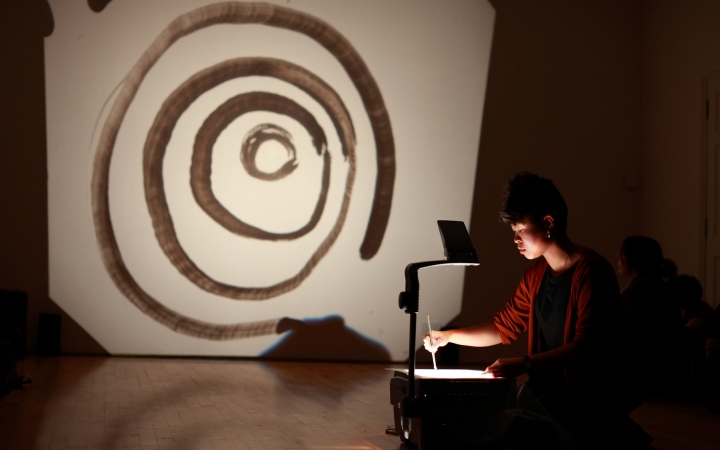
Title: Layers Channels Paths History, performed at Clonlea Studios, Dublin. Photo Credit: Senija Topcic
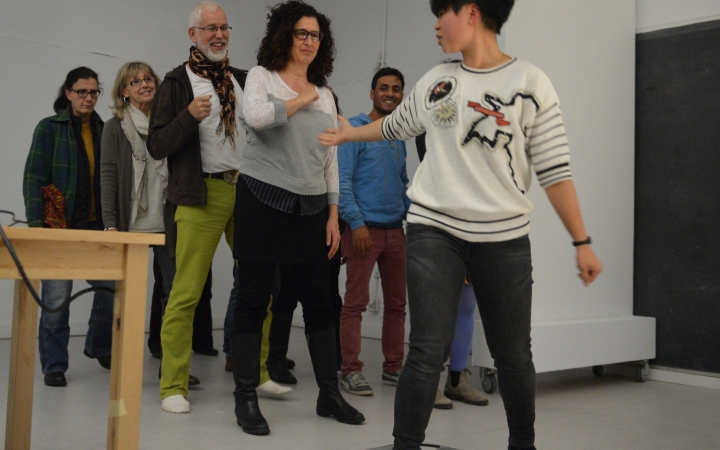
Title: Layers Channels Paths History, performed at 7a\*11d International Festival of Performance Art, Toronto. Credit: Henry Chan
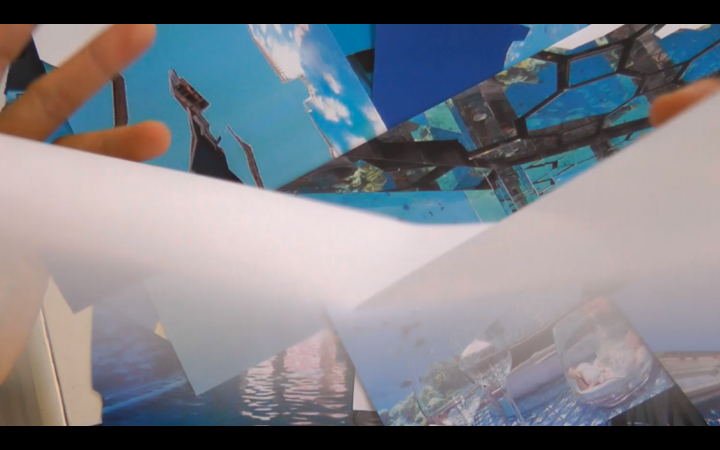
Title: The Taste of The Name